
Explainers
How Chinese service standards are advancing: 2 public milestones from 2024 to 2025
Published
Updated
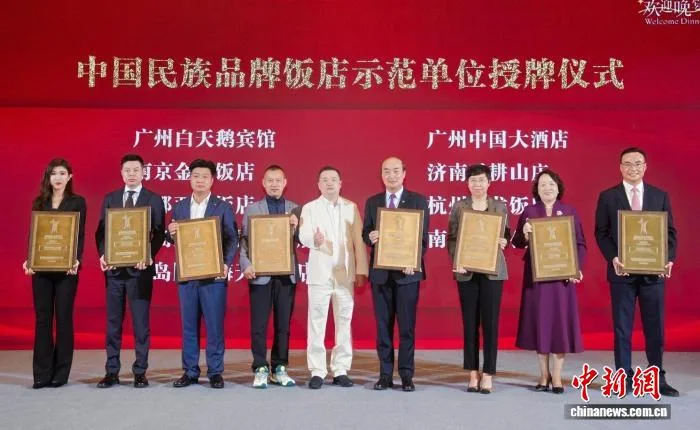
A China News Service interview published on March 11, 2026 records 2 consecutive milestones: an ethnic brand hotel specification in 2024 and an ethnic cuisine specification in 2025. The 2 years and 2 specifications show work extending from the overall hotel setting into dining products, but the public report does not describe them as a fully completed Chinese service system.
Evidence snapshot
- Hotel specification
2024
The China News Service interview records that the ethnic brand hotel specification was published in 2024.
- Ethnic cuisine specification
2025
The same interview records that the ethnic cuisine specification followed in 2025.
- Documented milestones
2
Public reporting explicitly documents 2 standards milestones across 2024 and 2025.
Key takeaways
- 01Public reporting supports 2 milestones: the 2024 hotel specification and the 2025 ethnic cuisine specification.
- 02The hotel specification concerns the broader service setting, while the cuisine specification brings standards into a specific product and dining experience.
- 03Standards provide shared language, delivery methods, and a basis for improvement; they do not require every region or brand to express culture in the same way.
How the 2 specifications relate
The 2024 hotel specification corresponds to a broader operating setting that includes brand position, space, products, and service. The 2025 ethnic cuisine specification focuses on dining, a frequent cultural touchpoint. Together, they can be understood as continued exploration from an overall framework into a specific product field.
The public report confirms the dates and standards milestones but does not provide all clauses, scopes, or implementation results. This site does not infer unpublished requirements or describe work in preparation as completed.
How standards enter everyday service
Standards become stable service capability only when they enter staff actions, product explanations, quality checks, training, and review. Cultural themes can still differ by place and brand; standards clarify a basic method and evaluation language.
For project teams, the practical task is to connect cultural sources, guest touchpoints, delivery responsibilities, and improvement records so each service can be explained and reviewed.
Implementation steps
- 01Define the setting the standard is intended to address, such as the overall hotel experience or an ethnic cuisine product.
- 02Translate cultural principles into requirements that staff can deliver and projects can check.
- 03Use training, trials, and records to verify that the requirements can be delivered consistently.
- 04Revise the method through operating feedback and distinguish clearly between published work and work still in progress.
Experience-based practice compared with standardized practice
Standardization does not make all cultural expression identical. It makes effective methods explainable, repeatable, and improvable.
| Dimension | Experience-based practice | Standardized practice |
|---|---|---|
| Knowledge carrier | Depends on individual experience and verbal transfer | Uses explicit requirements, staff methods, and records |
| Delivery checks | Primarily checks whether an activity was completed | Checks cultural basis, guest experience, and service coherence |
| Continuous improvement | Makes one-time corrections after a problem | Builds knowledge through training, review, and version updates |